Uganda, often referred to as the “Pearl of Africa,” is home to three spectacular mountain national parks that showcase the country’s diverse landscapes, rich biodiversity, and vibrant cultures. Join us on an exhilarating journey as we explore these alpine paradises and discover the wonders they hold.
Rwenzori Mountains National Park
Towering above the African savannah, the Rwenzori Mountains are a rugged and mystical landscape of towering peaks, lush rainforests, and ancient glaciers. Explore the “Mountains of the Moon” and embark on a Rwenzori mountaineering expedition to the Margherita Peak, the highest point in Uganda. Traverse through enchanted forests, cross cascading waterfalls, and marvel at the breathtaking beauty of this UNESCO World Heritage Site.
Rwenzori Mountains: Africa’s Alpine Wonderland
Known as the “Mountains of the Moon,” the Rwenzori Mountains offer some of the most challenging and rewarding hiking experiences in Africa. With towering peaks, lush rainforests, and glacial valleys, the Rwenzoris are a paradise for intrepid hikers seeking adventure.
More about the Rwenzori mountains Africa’s Alpine wonderland.
Misty Peaks and Glacial Valleys:
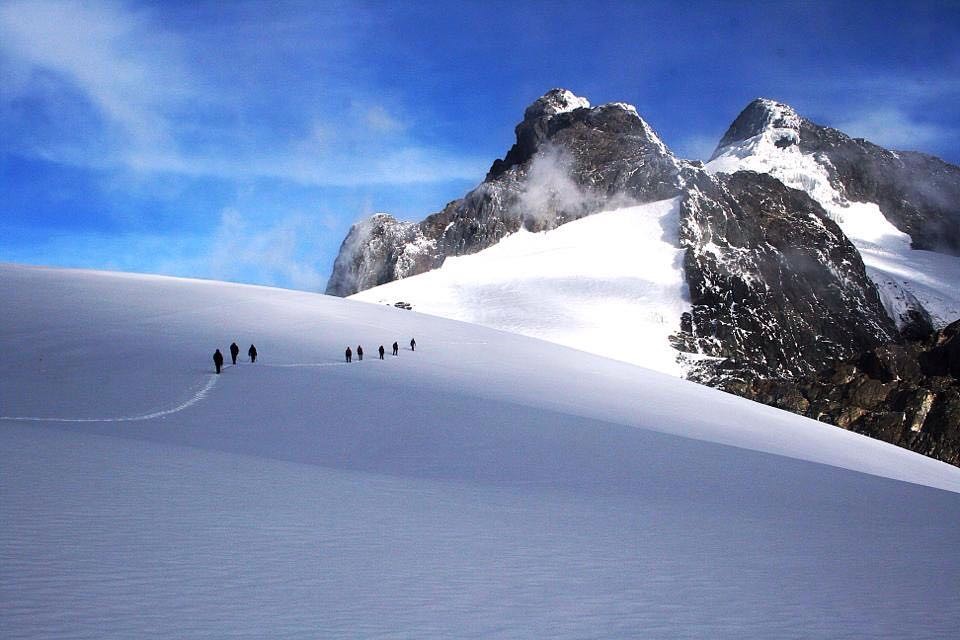
Rising to heights of over 5,000 meters (16,400 feet), the Rwenzori Mountains form a dramatic backdrop against the African skyline. At their highest points, permanent glaciers and snowfields glisten in the sun, while misty clouds cloak the peaks in an ethereal veil.
Explore the hidden valleys and deep gorges of the Rwenzoris, where crystal-clear streams and waterfalls cascade down moss-covered cliffs, creating a symphony of sights and sounds that stir the soul.
Diverse Ecosystems and Endemic Species:
The Rwenzori Mountains are renowned for their rich biodiversity, with diverse ecosystems ranging from montane rainforests to alpine meadows. These habitats support a wealth of plant and animal life, including numerous endemic species found nowhere else on Earth.
Encounter towering Giant Lobelias, vibrant Rwenzori Balsams, and majestic Rwenzori Duikers as you journey through the mountains. Birdwatchers will delight in spotting rare avian species such as the Rwenzori Turaco and the Rwenzori Nightjar flitting among the trees.
Cultural Heritage and Traditions:
The Rwenzori Mountains are not only a natural wonder but also a cultural treasure trove, inhabited by indigenous communities such as the Bakonzo and Bamba peoples. These communities have lived in harmony with the mountains for centuries, cultivating a deep spiritual connection to the land.
Immerse yourself in the rich cultural heritage of the Rwenzori region by visiting local villages, attending traditional ceremonies, and learning about the customs, beliefs, and rituals of the mountain communities. Experience the warmth and hospitality of the people as they share their stories and traditions with you.
Challenges and Rewards of Trekking:
For adventurous spirits, trekking in the Rwenzori Mountains offers a once-in-a-lifetime experience. Choose from a variety of trekking routes, each offering its own challenges and rewards, from the classic Central Circuit to the summit of Margherita Peak.
Trek through dense forests, cross rushing rivers, and ascend steep ridges as you make your way towards the lofty summits. Along the way, be prepared to encounter breathtaking vistas, unique flora and fauna, and the sense of accomplishment that comes with conquering Africa’s Alpine wonderland.
HIKING ROUTES IN THE RWENZORI.
The Rwenzori Mountains offer a variety of trekking routes, each with its own unique characteristics and challenges. Choose from a variety of trekking routes, ranging from the classic Central Circuit to the more challenging Margherita Peak summit attempt. Be prepared for rugged terrain, unpredictable weather, and stunning scenery around every corner. Here are some of the main routes commonly explored by trekkers:
Central Circuit Route:
Duration:
The hike through this route takes 7 to 9 days
Description:
The Central Circuit is the most popular and classic route for trekking in the Rwenzori Mountains. It circumnavigates the main peaks of the range, offering a comprehensive exploration of the diverse landscapes and ecosystems.
Highlights:
Trek through lush montane rainforests, bamboo forests, and alpine meadows. Pass by stunning waterfalls, glacial valleys, and scenic viewpoints. Stay in mountain huts or campsites along the way, enjoying the camaraderie of fellow trekkers and the expertise of experienced guides.
Margherita Peak Summit Route:
Duration:
8 to 10 days (including Central Circuit)
Description:
For those seeking the ultimate challenge, the Margherita Peak Summit Route offers the opportunity to climb to the highest point in the Rwenzori Mountains. This route follows the Central Circuit initially before branching off towards the summit.
Highlights:
Ascend through rugged terrain and high-altitude landscapes, passing by glaciers, rock scrambles, and snowfields. Summit Margherita Peak (5,109 meters or 16,762 feet), enjoying panoramic views of the surrounding mountains and beyond. Requires proper acclimatization and mountaineering experience.
Kilembe Trail:
Description:
The Kilembe Trail begins in the town of Kilembe and offers a more challenging alternative to the Central Circuit. It features steep ascents, rugged terrain, and fewer crowds, providing a more remote and wilderness-focused trekking experience.
Highlights:
Explore the western side of the Rwenzori Mountains, passing through dense forests, bamboo zones, and high-alpine landscapes. Summit Mount Baker (4,842 meters or 15,885 feet) or Weismann Peak (4,620 meters or 15,157 feet), enjoying panoramic views of the Rwenzori range and beyond.
Duration:
The trek through this trail takes over 5 to 7 days
Nyakalengija Trail:
Description:
The Nyakalengija Trail is a shorter and less strenuous option for those looking for a taste of the Rwenzori Mountains without committing to a longer trek. It offers opportunities for day hikes or overnight camping experiences near the trailhead.
Highlights:
Trek through montane rainforests and bamboo zones, enjoying scenic views of waterfalls, rivers, and birdlife. Visit Nyabitaba Hut or John Matte Hut for overnight accommodation, or venture further along the trail for additional exploration.
Duration:
The hike through this route takes over 3 to 4 days
Bundibugyo Trail:
Description:
The Bundibugyo Trail is a lesser-known route that starts from the town of Bundibugyo in western Uganda. It offers a more remote and off-the-beaten-path trekking experience, with fewer facilities and infrastructure compared to other routes.
Highlights:
Traverse through pristine forests, remote villages, and rugged landscapes, encountering diverse flora and fauna along the way. Experience the cultural heritage of the Bakonzo and Bamba communities, who inhabit the foothills of the Rwenzori Mountains.
Duration:
The trekking takes over 3 to 5 days
These are just a few examples of the trekking routes available in the Rwenzori Mountains. Each route offers a unique perspective on this stunning mountain range, providing trekkers with unforgettable experiences and memories to last a lifetime. Before embarking on any trek, it’s essential to obtain up-to-date information, engage the services of experienced guides and porters, and ensure proper preparation and acclimatization to the high-altitude environment.
Conclusion:
The Rwenzori Mountains stand as a testament to the extraordinary beauty and diversity of the African continent. From their mist-shrouded peaks to their lush valleys and vibrant communities, they offer a journey of discovery and wonder unlike any other. Whether you’re drawn to the challenge of summiting Margherita Peak, the allure of exploring hidden valleys, or the rich cultural heritage of the mountain communities, the Rwenzori Mountains have something to offer every explorer. So pack your bags, lace up your boots, and prepare to embark on an adventure of a lifetime in Africa’s Alpine wonderland.
WHAT TO DO WHILE IN THE RWENZORI.
While visiting the Rwenzori Mountains, there are several activities and experiences to enjoy, catering to different interests and preferences. Here are some things to do while in the Rwenzori region:
Trekking and Hiking:
The main attraction of the Rwenzori Mountains is trekking and hiking. Embark on multi-day treks to explore the diverse landscapes, from lush rainforests to alpine meadows and glaciers. Popular trekking routes include the Central Circuit Trail, Kilembe Trail, and Margherita Peak Trail.
Mountain Climbing:
For experienced climbers, summiting the highest peak in the Rwenzori Mountains, Margherita Peak (5,109 meters), is a challenging but rewarding adventure. Guided expeditions are available for those interested in mountaineering.
Birdwatching:
The Rwenzori Mountains are home to a rich diversity of bird species, including several endemic and Albertine Rift endemics. Bring your binoculars and camera to spot birds such as the Rwenzori turaco, Rwenzori batis, and scarlet-tufted malachite sunbird.
Wildlife Viewing:
While trekking, keep an eye out for wildlife species that inhabit the Rwenzori Mountains, including primates such as chimpanzees, colobus monkeys, and L’Hoest’s monkeys. You may also encounter forest elephants, duikers, and various small mammals.
Photography:
Capture the stunning landscapes, unique flora, and fauna of the Rwenzori Mountains through photography. From panoramic views of snow-capped peaks to close-up shots of colorful flowers and wildlife, there are endless opportunities for photography enthusiasts.
Cultural Encounters:
Learn about the cultural heritage of the local communities living around the Rwenzori Mountains, such as the Bakonzo and Bamba peoples. Visit traditional villages, interact with community members, and learn about their customs, traditions, and way of life.
Nature Walks and Day Hikes:
If you are not up for a multi-day trek, consider embarking on shorter nature walks or day hikes around the foothills of the Rwenzori Mountains. Many trails offer opportunities for leisurely walks through forests, along rivers, and to scenic viewpoints.
Waterfall Exploration:
Explore the scenic waterfalls scattered throughout the slopes of the Rwenzori Mountains, such as the Mahoma Falls and Mubuku Falls. Enjoy hikes to the base of the falls for a refreshing dip or simply admire the cascading water in a tranquil setting.
Relaxation and Wellness:
After a day of adventure, unwind and rejuvenate your body and mind with some relaxation and wellness activities. Treat yourself to a massage or spa treatment at one of the lodges or resorts near the Rwenzori Mountains, or simply find a peaceful spot to meditate and enjoy the tranquility of nature.
Whether you are seeking adventure, cultural immersion, or simply a chance to reconnect with nature, the Rwenzori Mountains offer a wide range of activities and experiences to suit every traveler’s interests and preferences.
GETTING TO RWENZORI MOUNTAIN.
Getting to the Rwenzori Mountains, also known as the Mountains of the Moon, typically involves traveling to the nearby town of Kasese in western Uganda, which serves as the main gateway to the mountain range. Here are the main transportation options for reaching the Rwenzori Mountains:
By Air:
The nearest major airport to the Rwenzori Mountains is Entebbe International Airport (EBB) in Uganda’s capital city, Kampala. From Entebbe, you can either take a domestic flight to the regional airport in Kasese or use ground transportation to reach Kasese.
Domestic airlines such as AeroLink Uganda and Fly Uganda operate flights between Entebbe and Kasese, offering a convenient and time-saving option for travelers.
By Road:
Most travelers opt to reach the Rwenzori Mountains by road, either by self-driving or hiring a private vehicle, or using public transportation options.
From Kampala, the capital city of Uganda, the most common route to the Rwenzori Mountains is via the Kampala-Mbarara-Kasese Road. The journey takes approximately 6 to 8 hours by road, depending on traffic and road conditions.
From Kasese, you can continue your journey to the Rwenzori Mountains by hiring a taxi or private vehicle. Alternatively, public minibus taxis (known as matatus) and buses operate between Kasese and towns such as Fort Portal and Mbarara, where you can transfer to onward transportation to the mountains.
Guided Tours:
Another option for reaching the Rwenzori Mountains is to join a guided tour or organized trekking expedition. Many tour operators in Uganda offer packages that include transportation, accommodation, meals, permits, and guided trekking experiences in the Rwenzori Mountains. Guided tours can be a convenient and hassle-free way to explore the mountains, especially for travelers who prefer not to drive or navigate public transportation on their own.
Travel Tips:
Before traveling to the Rwenzori Mountains, check the latest travel advisories, road conditions, and weather forecasts, especially during the rainy season when roads may be affected by mudslides or flooding.
If driving, ensure that your vehicle is in good condition and carry essentials such as a map, GPS device, spare tire, and emergency supplies.
It’s advisable to arrange accommodation and transportation in advance, especially during peak tourist seasons, to ensure availability and avoid last-minute hassles.
Whether you choose to fly, drive, or join a guided tour, the journey to the Rwenzori Mountains promises breathtaking scenery, diverse ecosystems, and unforgettable experiences amidst one of Africa’s most iconic mountain ranges.
WHEN TO GO TO RWENZORI MOUNTAIN.
Mountain Rwenzori can be visited all the year round. However, the best time to visit the Rwenzori mountains largely depends on your preferences and the activities you plan to undertake. Below are some factors to consider when planning to go to Rwenzori.
Dry Season (June to August, December to February):
The dry season is generally considered the best time to visit the Rwenzori Mountains, as the weather is typically dry and sunny, with clear skies and minimal rainfall. This makes it ideal for trekking, hiking, and outdoor activities.
During the dry season, the trails are in better condition, offering easier trekking and better visibility of the mountain’s stunning landscapes, glaciers, and alpine vegetation.
Gorilla Trekking Season:
If you are interested in combining your visit to the Rwenzori Mountains with gorilla trekking in nearby Bwindi Impenetrable National Park or Mgahinga Gorilla National Park, consider visiting during the dry season (June to August and December to February).
Gorilla trekking is possible year-round, but the dry season offers better trekking conditions and higher chances of spotting mountain gorillas in their natural habitat.
Cultural Festivals and Events:
Consider timing your visit to coincide with cultural festivals and events in the region, such as the Imbalu circumcision ceremony of the Bagisu people. These festivals often take place during specific times of the year and offer unique opportunities to experience local culture and traditions.
Birdwatching and Wildlife Viewing:
If birdwatching and wildlife viewing are your main interests, the wetter months of March to May and September to November can be particularly rewarding. During these months, the vegetation is lush and green, and birdlife is abundant, making it an excellent time for birdwatching and wildlife photography.
Accessibility:
Before planning your trip, check for any travel advisories, road closures, or park closures that may affect accessibility to the Rwenzori Mountains, especially during the rainy season when roads may become impassable due to mudslides or flooding.
Ultimately, the best time to visit the Rwenzori Mountains depends on your interests, preferences, and tolerance for weather conditions. Whether you choose to visit during the dry season for optimal trekking conditions or during the rainy season for lush greenery and birdwatching opportunities, the Rwenzori Mountains promise unforgettable experiences and breathtaking natural beauty year-round.
WHERE TO STAY WHILE IN THE RWENZORI MOUNTAINS.
While exploring the Rwenzori Mountains, there are several accommodation options available to suit different preferences and budgets. Here are some suggestions on where to stay while in the Rwenzori region:
Mountain Huts and Campsites:
For trekkers looking for an immersive experience in the heart of the mountains, mountain huts and campsites are available along the trekking routes. These basic accommodations provide shelter, sleeping quarters, and communal facilities, allowing trekkers to rest and recharge amidst the pristine wilderness of the Rwenzori Mountains.
Base Camps and Lodges:
At the foothills of the Rwenzori Mountains, there are base camps and lodges that offer comfortable accommodation and amenities for visitors. These facilities typically provide cozy rooms, hot showers, and delicious meals, allowing guests to relax and unwind after a day of trekking. Some lodges also offer guided tours, cultural activities, and wellness services for a holistic mountain experience.
Community Guesthouses:
Community-run guesthouses provide a unique opportunity to stay with local families and immerse yourself in the culture and traditions of the Rwenzori region. These guesthouses offer simple yet cozy accommodations, home-cooked meals, and the chance to interact with community members and learn about their way of life.
Luxury Eco-Lodges:
For travelers seeking a more upscale experience, there are luxury eco-lodges nestled amidst the natural beauty of the Rwenzori Mountains. These lodges offer luxurious accommodations, gourmet dining, and personalized services, combined with a commitment to sustainability and responsible tourism practices. Guests can enjoy panoramic views of the mountains, spa treatments, and guided excursions tailored to their interests.
Camping and Wilderness Expeditions:
For adventurers seeking a truly immersive wilderness experience, camping and wilderness expeditions offer the opportunity to spend nights under the stars in remote and secluded locations. Experienced guides lead multi-day treks into the heart of the Rwenzori Mountains, providing all necessary equipment, meals, and logistical support for an unforgettable outdoor adventure.
When planning your stay in the Rwenzori Mountains, consider your preferences, budget, and the type of experience you’re seeking. Whether you choose to stay in mountain huts, base camps, community guesthouses, luxury eco-lodges, or embark on a camping expedition, you’re sure to find accommodation that enhances your journey and allows you to fully appreciate the natural beauty and cultural richness of this spectacular destination.
Accommodations in the Rwenzori mountain national park.
In the Rwenzori Mountains region, there are several lodges and accommodation options that cater to travelers seeking comfort and convenience amidst the stunning natural landscapes. Here are some lodges in the Rwenzori area:
Equator Snow Lodge:
Located in the foothills of the Rwenzori Mountains, Equator Snow Lodge offers a luxurious retreat surrounded by lush forests and sweeping mountain views. The lodge features spacious cottages and chalets with modern amenities, including en-suite bathrooms, cozy fireplaces, and private balconies. Guests can enjoy gourmet dining, guided nature walks, and relaxing spa treatments during their stay.
Rwenzori Turaco View Camp:
Situated near the trailheads for trekking in the Rwenzori Mountains, Rwenzori Turaco View Camp offers comfortable accommodation in safari tents and cottages. The camp provides a tranquil setting with panoramic views of the surrounding landscapes, along with basic amenities such as hot showers, communal dining areas, and campfire pits for evening gatherings.
Ruboni Community Camp:
Run by the local community, Ruboni Community Camp offers an authentic cultural experience in the Rwenzori Mountains. The camp features cozy cottages and guesthouses with shared facilities, as well as camping options for budget-conscious travelers. Guests can participate in guided village tours, cultural performances, and traditional cooking classes, while supporting sustainable tourism initiatives and community development projects.
Mihunga Safari Lodge:
Nestled on the outskirts of Kasese town, Mihunga Safari Lodge offers a tranquil retreat with panoramic views of the Rwenzori Mountains and the surrounding countryside. The lodge features spacious rooms and suites with modern amenities, including air conditioning, satellite TV, and complimentary Wi-Fi. Guests can relax by the swimming pool, dine at the on-site restaurant, or embark on guided excursions to nearby attractions.
Sandton Hotel & Apartments:
Located in the heart of Kasese town, Sandton Hotel & Apartments offers comfortable accommodation for travelers exploring the Rwenzori Mountains region. The hotel features well-appointed rooms and apartments with amenities such as flat-screen TVs, minibars, and private balconies. Guests can enjoy complimentary breakfast, on-site dining options, and convenient access to local shops and restaurants.
These are just a few examples of lodges and accommodation options available in the Rwenzori Mountains region. Whether you’re seeking luxury accommodations, eco-friendly lodges, or community-run guesthouses, you’re sure to find a place to stay that suits your preferences and budget while exploring the natural wonders of the Rwenzori Mountains.
MOUNT ELGON NATIONAL PARK:
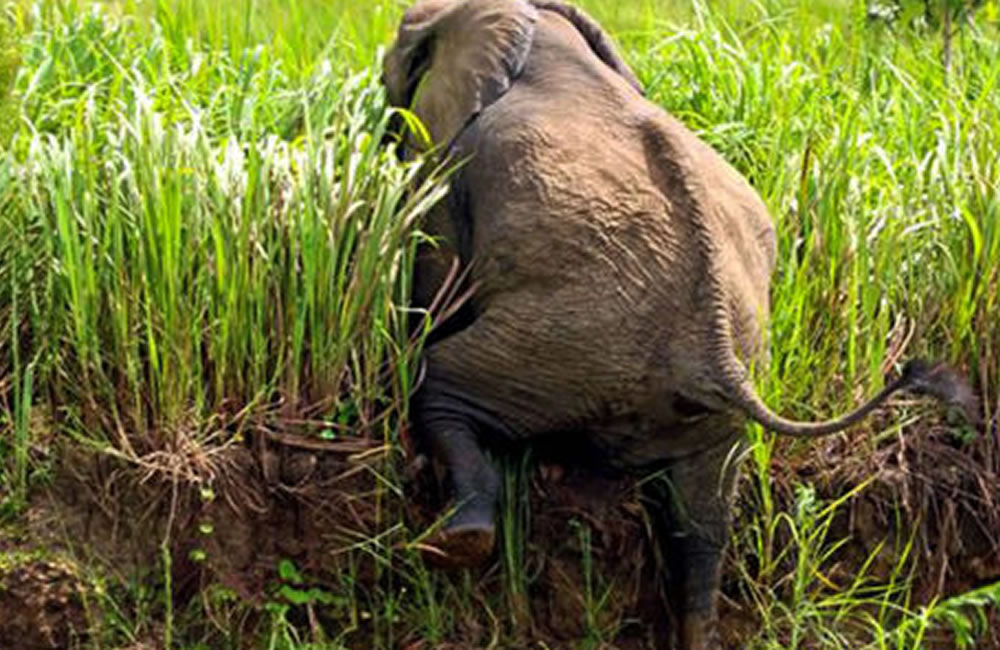
Located on the border between Uganda and Kenya, Mount Elgon National Park is home to Mount Elgon, an extinct volcano with the largest volcanic base in the world. Discover the park’s diverse habitats, from montane forests to alpine meadows, and encounter unique wildlife such as the endangered mountain gorilla and the elusive African elephant. Hike to the summit of Mount Elgon and witness the stunning crater lakes and panoramic views that await at the top.
More about mount Elgon.
Mount Elgon, located on the border between Uganda and Kenya, is an ancient and extinct volcano with a rich geological and ecological history. Here’s a deeper look into the unique features and attractions of Mount Elgon:
Geological Formation:
Mount Elgon is a massive shield volcano, formed over millions of years through volcanic activity and erosion. It is one of the oldest and largest volcanoes in East Africa, with a base diameter of approximately 80 kilometers (50 miles).
The volcano’s summit collapsed over time, forming a large caldera with a diameter of about 8 kilometers (5 miles). Inside the caldera are several smaller peaks, including the highest point, Wagagai Peak, which rises to an elevation of 4,321 meters (14,177 feet) above sea level.
Ecological Diversity:
Mount Elgon is renowned for its diverse ecosystems, which range from montane forests and bamboo thickets to heathlands, moorlands, and high-altitude alpine zones. These habitats support a wealth of plant and animal life, including numerous endemic species.
The mountain’s slopes are home to over 300 species of birds, including the endangered Lammergeier (bearded vulture) and Jackson’s Francolin. Mammals such as elephants, buffaloes, and various antelope species roam the lower elevations, while smaller mammals like duikers and bushbucks inhabit the forests.
Cultural Significance:
Mount Elgon holds cultural significance for the indigenous communities living in its vicinity, including the Bagisu and Sabiny peoples. These communities have cultural traditions and rituals associated with the mountain, including circumcision ceremonies and rituals honoring ancestral spirits.
Visitors to Mount Elgon have the opportunity to learn about the cultural heritage of the Bagisu and Sabiny communities through guided tours, visits to local villages, and cultural performances.
Trekking and Outdoor Adventures:
Mount Elgon offers excellent opportunities for trekking and outdoor adventures, with a network of trails leading to the summit and around the caldera. The most popular route is the Sasa Trail, which starts from Budadiri and ascends through dense forests and bamboo zones to the caldera rim. Trekkers can also explore other trails, including the Piswa Trail, the Sipi Trail, and the Kapkwai Trail, each offering unique perspectives on the mountain’s landscapes and ecosystems. Along the way, hikers may encounter scenic viewpoints, waterfalls, and hot springs.
Scenic Attractions:
Mount Elgon boasts several scenic attractions that captivate visitors with their natural beauty. The Sipi Falls, located on the mountain’s eastern slopes, is a series of three waterfalls cascading down rocky cliffs amidst lush vegetation. The falls are a popular destination for hiking, birdwatching, and photography.
Other scenic attractions on Mount Elgon include the hot springs at Tutum Cave, the Jackson’s Pool, a small crater lake nestled within the caldera, and the breathtaking views from the summit of Wagagai Peak, which offer sweeping panoramas of the surrounding landscape.
In conclusion, Mount Elgon is a treasure trove of natural beauty, ecological diversity, and cultural heritage, offering visitors a wealth of experiences to explore and enjoy. Whether trekking to the summit, discovering hidden waterfalls, or immersing oneself in local culture, Mount Elgon promises adventure and discovery at every turn.
Other activities to do while on mount Elgon besides trekking.
While trekking is the main attraction on Mount Elgon, there are several other activities and experiences to enjoy during your visit to this majestic mountain:
Birdwatching:
Mount Elgon is a paradise for birdwatchers, with over 300 bird species recorded in the area. Bring your binoculars and camera to spot a variety of colorful birds, including the endangered Lammergeier (bearded vulture), Jackson’s Francolin, Hartlaub’s Turaco, and the Eastern Bronze-naped Pigeon.
Cultural Encounters:
Immerse yourself in the cultural heritage of the local communities living around Mount Elgon. Visit traditional villages, interact with the Bagisu and Sabiny peoples, and learn about their customs, traditions, and way of life. You may have the opportunity to witness cultural ceremonies, such as traditional dances or rituals.
Nature Photography:
Capture the stunning landscapes, diverse flora, and wildlife of Mount Elgon through photography. From panoramic views of the caldera to close-up shots of unique plant species, there are endless opportunities for photography enthusiasts to capture the beauty of the mountain and its surroundings.
Waterfall Exploration:
Explore the scenic waterfalls scattered throughout the slopes of Mount Elgon. The Sipi Falls, located on the eastern side of the mountain, is the most famous waterfall in the region, consisting of three impressive cascades surrounded by lush vegetation. Enjoy a hike to the base of the falls for a refreshing dip or simply admire the views from a distance.
Cave Exploration:
Discover the hidden caves and caverns nestled within Mount Elgon’s rugged terrain. Tutum Cave, located near Sipi Falls, is the largest and most accessible cave on the mountain. Explore the cave’s interior, marvel at its unique rock formations, and learn about its geological history from knowledgeable guides.
Cycling and Mountain Biking:
For adventurous travelers, cycling and mountain biking offer an exhilarating way to explore the landscapes of Mount Elgon. Rent a bike or join a guided cycling tour to ride along scenic trails, through forests, villages, and farmland, and enjoy panoramic views of the mountain and surrounding countryside.
Nature Walks and Day Hikes:
If you are not up for a multi-day trek, consider embarking on shorter nature walks or day hikes around Mount Elgon. Many trails offer opportunities for leisurely walks through forests, along rivers, and to scenic viewpoints, allowing you to experience the mountain’s beauty at a more relaxed pace.
Relaxation and Wellness:
After a day of exploration, unwind and rejuvenate your body and mind with some relaxation and wellness activities. Treat yourself to a massage or spa treatment at one of the lodges or resorts near Mount Elgon, or simply find a peaceful spot to meditate, practice yoga, or enjoy the tranquility of nature.
Whether you are seeking adventure, cultural immersion, or simply a chance to reconnect with nature, Mount Elgon offers a wide range of activities and experiences to suit every traveler’s interests and preferences.
WHEN TO GO TO MOUNT ELGON.
Mount Elgon can be visited all the year round. However, the best time to visit Mount Elgon largely depends on your preferences and the activities you plan to undertake. However, here are some general guidelines to consider:
Dry Season (June to August, December to February):
The dry season, particularly the months of June to August and December to February, is generally considered the best time to visit Mount Elgon. During this period, the weather is typically dry and sunny, making it ideal for trekking, hiking, and other outdoor activities.
Clear skies offer excellent visibility, allowing for stunning views of the surrounding landscapes and the opportunity to spot wildlife and birds. The trails are also in better condition, with less mud and fewer obstacles.
Shoulder Seasons (March to May, September to November)
The shoulder seasons, including the months of March to May and September to November, can also be good times to visit Mount Elgon, although the weather may be less predictable.
March to May is the long rainy season, characterized by occasional heavy rains and cloudy skies. While trekking conditions may be more challenging, the mountain is lush and green, offering beautiful scenery and vibrant vegetation.
September to November is the short rainy season, with shorter bursts of rain and generally milder temperatures. This period is often quieter in terms of tourist crowds, offering a more tranquil and intimate experience in nature.
Wildlife Viewing and Birdwatching:
If wildlife viewing and birdwatching are your main interests, the dry season (June to August, December to February) is typically the best time to visit Mount Elgon. During this period, animals are more active, and birdlife is abundant, especially around water sources.
Cultural Festivals and Events:
Consider timing your visit to coincide with cultural festivals and events in the surrounding communities, such as the Imbalu circumcision ceremony of the Bagisu people. These festivals often take place during specific times of the year and offer unique opportunities to experience local culture and traditions.
Accessibility:
Keep in mind that weather conditions can affect road access to Mount Elgon, especially during the rainy season when some roads may become impassable due to mudslides or flooding. It’s advisable to check road conditions and travel advisories before planning your trip.
Ultimately, the best time to visit Mount Elgon depends on your personal preferences, interests, and tolerance for weather conditions. Whether you choose to visit during the dry season for optimal trekking conditions or during the rainy season to experience the mountain’s lush beauty, Mount Elgon promises unforgettable experiences and adventures year-round.
GETTING TO MOUNT ELGON.
Getting to Mount Elgon can be an adventure in itself, but with proper planning, it’s relatively straightforward. Here are the main transportation options for reaching Mount Elgon:
By Air:
The nearest major airport to Mount Elgon is Entebbe International Airport (EBB) in Uganda’s capital city, Kampala. From Entebbe, you can either take a domestic flight to the regional airports of Soroti or Mbale, which are the closest airports to Mount Elgon.
Domestic airlines such as Eagle Air and Aerolink Uganda operate flights between Entebbe and Soroti or Mbale. From the airport, you can arrange for ground transportation to Mount Elgon.
By Road:
Most travelers opt to reach Mount Elgon by road, either by self-driving or hiring a private vehicle, or using public transportation options.
From Kampala, the capital city of Uganda, the most common route to Mount Elgon is via Mbale, the largest town near the mountain. The journey takes approximately 4 to 5 hours by road, depending on traffic and road conditions.
From Mbale, you can continue your journey to Mount Elgon by hiring a taxi or private vehicle. Alternatively, public minibus taxis (known as matatus) and buses operate between Mbale and towns such as Kapchorwa and Sironko, which are located near the mountain.
Guided Tours:
Another option for reaching Mount Elgon is to join a guided tour or organized trekking expedition. Many tour operators in Uganda offer packages that include transportation, accommodation, meals, and guided trekking experiences on Mount Elgon.
Guided tours can be a convenient and hassle-free way to explore Mount Elgon, especially for travelers who prefer not to drive or navigate public transportation on their own.
Travel Tips:
Before traveling to Mount Elgon, it’s advisable to check the latest travel advisories, road conditions, and weather forecasts, especially during the rainy season when road access may be affected.
If driving, ensure that your vehicle is in good condition, and carry essentials such as a map, GPS device, spare tire, and emergency supplies.
It’s recommended to arrange accommodation and transportation in advance, especially during peak tourist seasons, to ensure availability and avoid last-minute hassles.
Whether you choose to fly, drive, or join a guided tour, the journey to Mount Elgon is sure to be filled with stunning scenery, cultural encounters, and the anticipation of adventure in one of East Africa’s most captivating mountain landscapes.
ACCOMMODATION OPTIONS ON MOUNT ELGON.
While visiting Mount Elgon, there are various accommodation options to suit different preferences and budgets. Here are some suggestions for places to stay while exploring Mount Elgon:
Lodges and Resorts:
Several lodges and resorts are located in the vicinity of Mount Elgon, offering comfortable accommodation and amenities for travelers. These establishments typically provide a range of room options, from standard rooms to luxury suites, as well as on-site dining, recreational facilities, and guided activities.
Examples include Mount Elgon Hotel & Spa in Mbale, Sipi River Lodge near Sipi Falls, and Mbale Resort Hotel in Mbale town. These properties offer convenient access to the mountain and its attractions, as well as opportunities for relaxation and exploration.
Campsites and Guesthouses:
For budget-conscious travelers or those seeking a more rustic experience, campsites and guesthouses are available in the Mount Elgon area. These options often provide basic accommodation facilities, such as dormitory rooms or tented campsites, as well as shared bathrooms and communal areas.
Examples include Sipi Falls Campsite, Noah’s Ark Hotel & Lodge in Kapchorwa, and Mama’s & Papa’s Place in Sironko. These establishments offer affordable lodging options and a chance to connect with fellow travelers and locals.
Community Homestays:
For a more immersive and authentic experience, consider staying with local families in community homestays near Mount Elgon. This option allows you to experience the local way of life, participate in cultural activities, and support sustainable tourism initiatives that benefit the community.
Community homestays are available in villages such as Budadiri, Budadiri-Wakiso, and Kapkwata, where you can engage with the Bagisu and Sabiny communities and learn about their traditions, cuisine, and daily routines.
Tented Camps and Eco-Lodges:
For eco-conscious travelers who appreciate sustainable tourism practices and eco-friendly accommodation, tented camps and eco-lodges offer a responsible and immersive lodging experience. These establishments are often located in scenic and remote locations, offering a close connection to nature.
Examples include Sasa River Camp near Budadiri, Sipi Explorer Camp overlooking Sipi Falls, and Mount Elgon National Park Bandas within the park boundaries. These options provide an opportunity to disconnect from the hustle and bustle of daily life and reconnect with the natural world.
Guided Treks and Expeditions:
If you’re planning a multi-day trek or expedition on Mount Elgon, accommodation options may vary depending on the route and itinerary. Some trekking companies and tour operators provide tented camps or mountain huts along the trails, offering basic shelter and facilities for overnight stays.
It’s essential to check with your tour operator or guide regarding accommodation arrangements, equipment requirements, and camping fees before embarking on your trek.
No matter where you choose to stay while visiting Mount Elgon, you’ll have the opportunity to immerse yourself in the beauty of the mountain and its surroundings, connect with local communities, and create unforgettable memories amidst the splendor of East Africa’s natural landscapes.
ACCOMMODATIONS.
While Mount Elgon is not as developed for tourism as some other mountain destinations, there are several lodges and accommodations in the surrounding areas that cater to visitors. Here are some lodges near Mount Elgon:
Sipi River Lodge:
Located near Sipi Falls, Sipi River Lodge offers comfortable cottages and rooms with stunning views of the falls and surrounding countryside. The lodge also features a restaurant serving delicious meals made with fresh local ingredients, as well as guided tours and activities in the area.
Noah’s Ark Hotel & Lodge:
Situated in Kapchorwa town, Noah’s Ark Hotel & Lodge provides accommodation in cozy rooms and cottages. Guests can enjoy panoramic views of Mount Elgon and the Kapchorwa Valley, as well as amenities such as a restaurant, bar, and conference facilities.
Mount Elgon Hotel & Spa:
Located in Mbale town, Mount Elgon Hotel & Spa offers comfortable rooms and suites with modern amenities. The hotel features a restaurant serving a variety of cuisines, a bar, a swimming pool, and a spa offering massage and wellness treatments.
Mbale Resort Hotel:
Mbale Resort Hotel is a luxury hotel located in Mbale town, offering spacious rooms and suites with elegant furnishings and amenities. Guests can enjoy dining at the hotel’s restaurants, relaxing by the pool, or indulging in spa treatments.
Sasa River Camp:
Situated near the Sasa trailhead in Budadiri, Sasa River Camp offers basic accommodation in tents and bandas (traditional huts). The camp provides a rustic camping experience amidst the natural beauty of Mount Elgon, with access to trekking and outdoor activities.
Sipi Explorer Camp:
Sipi Explorer Camp offers tented accommodation overlooking Sipi Falls. The camp provides a unique camping experience in comfortable safari-style tents with ensuite bathrooms and verandas. Guests can enjoy guided hikes to the falls and other attractions in the area.
Mount Elgon National Park Bandas:
Within Mount Elgon National Park, there are basic bandas (huts) available for rent near the trailheads. These bandas provide simple accommodation for trekkers and hikers exploring the mountain, with shared facilities and amenities.
These are just a few examples of lodges and accommodations near Mount Elgon. It’s advisable to book accommodation in advance, especially during peak tourist seasons, to ensure availability and avoid disappointment. Additionally, some lodges may offer packages that include guided tours, activities, and meals, providing a convenient and enjoyable stay in the Mount Elgon area.
VIRUNGA VOLCANOES NATIONAL PARK:
Bordering Uganda, Rwanda, and the Democratic Republic of Congo, Virunga Volcanoes National Park is a haven for mountain gorillas and a hotspot for volcanic activity. Trek through bamboo forests and volcanic slopes to encounter these gentle giants in their natural habitat, and learn about the conservation efforts underway to protect them. Explore the park’s diverse landscapes, including the iconic Virunga Massif and the awe-inspiring Nyiragongo volcano, known for its fiery lava lake.
Essential Tips for Hikers:
Prepare Physically and Mentally:
Mountain hiking in Uganda requires a good level of physical fitness and mental resilience. Be sure to train beforehand, including cardiovascular exercises, strength training, and hiking with a loaded backpack.
Pack Appropriately:
Pack essential gear and supplies, including sturdy hiking boots, lightweight clothing layers, a waterproof jacket, a first aid kit, plenty of water, high-energy snacks, a map and compass or GPS device, and a headlamp or flashlight.
Respect the Environment:
Leave no trace by following Leave No Trace principles, including packing out all trash, staying on designated trails, and respecting wildlife and local communities. Practice responsible tourism and cultural sensitivity throughout your journey.
Stay Informed:
Check weather forecasts and trail conditions before embarking on your hike, and be prepared for changes in weather and terrain. Consider hiring a local guide or joining a guided trek to enhance safety and navigation.
Enjoy the Journey:
While reaching the summit may be your goal, remember to enjoy the journey along the way. Take time to appreciate the stunning scenery, diverse ecosystems, and cultural heritage of Uganda’s mountains, and cherish the memories you make along the trail.
Conclusion:
Embarking on a mountain hiking adventure in Uganda is a journey of discovery, challenge, and inspiration. Whether you are summiting the peaks of the Rwenzori Mountains, traversing the slopes of Mount Elgon, or exploring the volcanic landscapes of the Virunga Massif, each step brings you closer to the heart of Uganda’s wilderness and the spirit of adventure that beckons from its lofty peaks. So lace up your boots, pack your bags, and prepare for the ultimate hiking experience in the Pearl of Africa. Uganda’s mountains are calling – are you ready to conquer them?
More about the Virunga Volcanoes.
The Virunga Massif is a chain of volcanic mountains located in the border region of three countries: Uganda, Rwanda, and the Democratic Republic of Congo (DRC). These majestic volcanoes are part of the Albertine Rift, a branch of the East African Rift system, and are renowned for their stunning landscapes, rich biodiversity, and cultural significance. Here’s more about the Virunga volcanoes:
Geological Formation:
The Virunga Massif is home to eight major volcanoes, three of which are active: Mount Nyiragongo, Mount Nyamuragira, and Mount Muhabura. The other volcanoes in the massif are Mount Karisimbi, Mount Mikeno, Mount Visoke (Bisoke), Mount Sabyinyo, and Mount Gahinga.
These volcanoes were formed through volcanic activity associated with the movement of tectonic plates in the region. They are characterized by steep slopes, rugged terrain, and distinct crater structures, some of which contain lava lakes and fumaroles.
Biodiversity Hotspot:
The Virunga Massif is a biodiversity hotspot, home to a wide range of plant and animal species, including several endangered and endemic species. The dense forests, bamboo thickets, and alpine meadows on the slopes of the volcanoes support a rich array of flora and fauna.
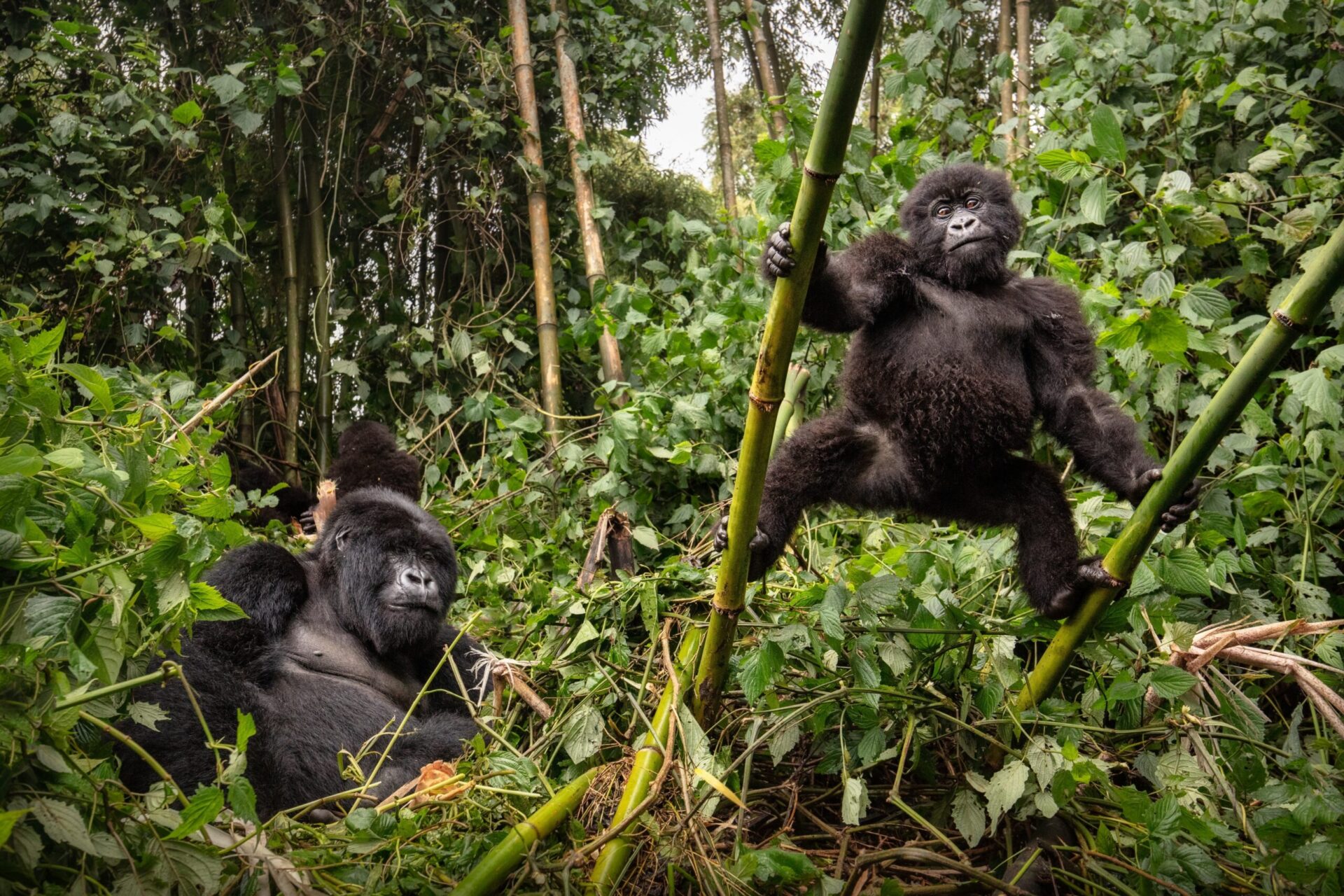
The mountain gorillas of the Virunga Massif are perhaps the most famous inhabitants of the region. These critically endangered primates inhabit the montane forests of the massif and are the focus of conservation efforts aimed at protecting their habitat and ensuring their survival.
Mountain Gorilla Trekking:
One of the main attractions of the Virunga Massif is mountain gorilla trekking, which offers visitors the opportunity to observe these magnificent creatures in their natural habitat. Gorilla trekking tours are conducted in designated gorilla habitats within the national parks of the region.
Tourists are accompanied by experienced guides and trackers who lead them through the forests in search of gorilla families. Once located, visitors are allowed a brief but unforgettable encounter with the gorillas, during which they can observe their behavior, social interactions, and daily activities.
Cultural Heritage:
The Virunga Massif is not only a natural wonder but also a cultural treasure trove, inhabited by indigenous communities such as the Batwa and Bakiga peoples. These communities have lived in harmony with the volcanoes for centuries, cultivating a deep spiritual connection to the land.
Visitors to the region can learn about the cultural heritage of the local communities through guided tours, visits to traditional villages, and cultural performances. The Batwa Experience, for example, offers insights into the traditional lifestyle and customs of the Batwa pygmies, who once lived in the forests of the Virunga Massif.
Adventure Activities:
In addition to gorilla trekking, the Virunga Massif offers a range of adventure activities for outdoor enthusiasts. These include hiking to the summits of the volcanoes, exploring lava tubes and caves, and visiting scenic viewpoints overlooking the surrounding landscapes.
Mountaineers can summit peaks such as Mount Muhabura, Mount Karisimbi, and Mount Nyiragongo, each offering its own set of challenges and rewards. Climbing Mount Nyiragongo, with its active lava lake, is a particularly popular and thrilling experience.
The Virunga Massif is a truly remarkable destination, offering a blend of natural beauty, cultural heritage, and adventure experiences that captivate visitors from around the world. Whether trekking to see mountain gorillas, summiting volcanic peaks, or immersing oneself in the cultural traditions of the local communities, the Virunga volcanoes promise unforgettable adventures and lasting memories.
WHEN TO GO TO THE VIRUNGA VOLCANOES.
The Virunga Volcanoes can be visited all the year round. However, the best time to visit the Virunga volcanoes largely depends on the activities you plan to undertake and your personal preferences. Here are some factors to consider when deciding when to go:
Dry Season (June to September, December to February):
The dry season is generally considered the best time to visit the Virunga volcanoes, as the weather is typically clear, sunny, and relatively dry. This makes it ideal for outdoor activities such as gorilla trekking, hiking, and mountain climbing.
During the dry season, vegetation is less dense, making it easier to spot wildlife, including mountain gorillas, and providing better visibility for scenic views of the volcanoes and surrounding landscapes.
Gorilla Trekking Season:
Gorilla trekking is possible year-round in the Virunga Massif, but the dry season (June to September and December to February) is considered the peak season for gorilla trekking due to favorable weather conditions.
However, it’s important to note that gorilla permits can be in high demand during the peak season, so it’s advisable to book permits well in advance to secure your spot.
Rainy Season (March to May, October to November):
The rainy season in the Virunga Massif is characterized by frequent rain showers, cloudy skies, and muddy trails. While this may not be the best time for gorilla trekking or hiking, it can still be a rewarding time to visit for those interested in birdwatching or experiencing the lush greenery of the forests.
The rainy season also tends to be less crowded, so you may have a more intimate and secluded experience with the gorillas and other wildlife.
Cultural Festivals and Events:
Consider timing your visit to coincide with cultural festivals and events in the region, such as traditional ceremonies, cultural performances, or community celebrations. These events offer unique opportunities to experience the local culture and traditions of the communities living near the Virunga volcanoes.
Accessibility:
Before planning your trip, check for any travel advisories, road closures, or park closures that may affect accessibility to the Virunga volcanoes, especially during the rainy season when roads may become impassable due to mudslides or flooding.
Ultimately, the best time to visit the Virunga volcanoes depends on your interests, preferences, and tolerance for weather conditions. Whether you choose to visit during the dry season for optimal trekking conditions or during the rainy season for a more secluded experience, the Virunga volcanoes promise unforgettable adventures and encounters with nature.
GETTING TO THE VIRUNGA VOLCANOES.
Getting to the Virunga Volcanoes typically involves traveling to one of the nearby towns or cities in Rwanda, Uganda, or the Democratic Republic of Congo (DRC), depending on your chosen entry point. Here are the main transportation options for reaching the Virunga Volcanoes:
By Air:
The most convenient way to reach the Virunga Volcanoes is by flying into one of the international airports near the region. The closest airports are:
Kigali International Airport (KGL) in Rwanda
Entebbe International Airport (EBB) in Uganda
Goma International Airport (GOM) in the Democratic Republic of Congo (DRC)
From these airports, you can arrange ground transportation to the towns or national parks near the Virunga Volcanoes.
By Road:
Once you arrive at one of the international airports, you can travel to the Virunga Volcanoes by road. The most common entry points are:
From Kigali, Rwanda:
Travel to the town of Musanze (formerly Ruhengeri), which serves as the gateway to Volcanoes National Park. The journey takes approximately 2 to 3 hours by road.
From Entebbe or Kampala, Uganda:
Travel to the town of Kisoro or Mgahinga Gorilla National Park, which are located near the Ugandan border with Rwanda and the DRC. The journey takes approximately 8 to 10 hours by road.
From Goma, Democratic Republic of Congo (DRC):
Travel to Virunga National Park or the town of Gisenyi in Rwanda, which are located near the border with Rwanda. The journey takes approximately 1 to 2 hours by road, depending on traffic and road conditions.
It’s advisable to hire a private vehicle or use a reputable tour operator for transportation, as road conditions in the region can vary, especially during the rainy season.
Crossing International Borders:
If you are traveling between countries, such as from Rwanda to Uganda or the DRC, you’ll need to cross international borders. Make sure to have all necessary travel documents, including passports, visas (if required), and permits for national parks or protected areas.
Check the latest travel advisories and border crossing regulations before planning your trip, as border crossings may be subject to restrictions or closures due to security concerns or other factors.
Guided Tours and Transport:
Alternatively, you can book a guided tour or transportation package with a reputable tour operator or travel agency. Many tour operators offer guided tours to the Virunga Volcanoes, including transportation, accommodation, permits, and guided activities such as gorilla trekking and hiking.
Guided tours can be a convenient and hassle-free way to explore the Virunga Volcanoes, especially for travelers who prefer not to drive or navigate public transportation on their own.
When planning your trip to the Virunga Volcanoes, it’s important to consider factors such as travel logistics, entry requirements, and safety precautions. Whether you choose to travel by air, road, or guided tour, the journey to the Virunga Volcanoes promises unforgettable experiences and encounters with some of Africa’s most iconic natural wonders.
WHERE TO STAY WHILE IN THE VIRUNGA VOLCANOES NATIONAL PARK.
While exploring Virunga National Park and the stunning Virunga Volcanoes, visitors have several accommodation options to choose from, ranging from luxury lodges to more budget-friendly options. Here are some suggestions on where to stay while in Virunga Volcanoes National Park:
Bisate Lodge:
Bisate Lodge offers luxurious accommodation near Volcanoes National Park in Rwanda, providing guests with stunning views of the surrounding volcanoes. The lodge features spacious villas crafted from natural materials, each with a fireplace, en-suite bathroom, and private veranda. Guests can enjoy gourmet dining, guided nature walks, and cultural experiences during their stay.
Virunga Lodge:
Situated on a ridge with panoramic views of the Virunga Volcanoes, Virunga Lodge offers upscale accommodation in Rwanda’s Musanze district. The lodge features elegant cottages with en-suite bathrooms, spacious living areas, and private terraces overlooking the mountains. Guests can relax by the fireplace, dine at the on-site restaurant, and embark on gorilla trekking adventures in nearby Volcanoes National Park.
Sabyinyo Silverback Lodge:
Located near the entrance to Volcanoes National Park, Sabyinyo Silverback Lodge offers luxurious accommodations with breathtaking views of the surrounding countryside. The lodge features cozy cottages and suites with fireplaces, spacious bathrooms, and private verandas. Guests can enjoy gourmet dining, spa treatments, and guided nature walks in the foothills of the Virunga Volcanoes.
Kinigi Guesthouse:
Kinigi Guesthouse is a budget-friendly accommodation option located near the headquarters of Volcanoes National Park in Rwanda. The guesthouse offers simple yet comfortable rooms with shared bathrooms, ideal for travelers seeking affordable lodging close to the gorilla trekking starting point. Guests can enjoy home-cooked meals, hot showers, and easy access to the park’s attractions.
Gorillas Volcanoes Hotel:
Gorillas Volcanoes Hotel is a mid-range accommodation option located in Musanze town, just a short drive from Volcanoes National Park. The hotel offers comfortable rooms with en-suite bathrooms, satellite TV, and Wi-Fi access. Guests can dine at the on-site restaurant, relax in the garden area, and arrange gorilla trekking excursions through the hotel’s tour desk.
These are just a few examples of accommodation options available near Virunga Volcanoes National Park. Whether you’re seeking luxury lodges, mid-range hotels, or budget-friendly guesthouses, there are plenty of places to stay that will enhance your experience while exploring the breathtaking beauty of the Virunga Mountains.
Conclusion:
Uganda’s mountain national parks offer a glimpse into the country’s natural and cultural heritage, from the mist-shrouded peaks of the Rwenzori Mountains to the volcanic landscapes of Mount Elgon and the Virunga Volcanoes. Whether you are a seasoned trekker, a wildlife enthusiast, or a nature lover seeking adventure, these alpine paradises have something to offer everyone. So pack your bags, lace up your boots, and embark on a journey of discovery through Uganda’s majestic mountain national parks.